

In less than twelve months, the Trump administration turned a contested policy idea into a structural reality across the pharmaceutical industry. What began as an executive order on May 12 2025 has since produced bilateral pricing agreements with 16 of the 17 largest drug manufacturers in the world, reshaped global launch strategies, triggered a landmark trade deal with the United Kingdom, and launched a federally managed direct-to-consumer drug platform.
For pharma and biotech executives and investors, the commercial, legal, and geopolitical implications are still unfolding. This post brings together everything that has been happening.
At a Glance: The MFN Deal Timeline
The table below provides a chronological overview of every major event in the MFN deal cycle to date.
| Date | Event | Source |
|---|---|---|
| 12 May 2025 | MFN Executive Order signed | White House |
| 20 May 2025 | HHS sets MFN price targets; all branded drugs without generic/biosimilar competition in scope | HHS |
| 31 July 2025 | Letters sent to 17 named CEOs; 60-day deadline | White House |
| 30 Sept. 2025 | Pfizer — Deal 1 (first bilateral agreement) | White House / Pfizer |
| 10 Oct. 2025 | AstraZeneca — Deal 2 | AstraZeneca |
| 16 Oct. 2025 | EMD Serono — Deal 3 (IVF focus) | White House |
| 6 Nov. 2025 | Eli Lilly & Novo Nordisk — Deals 4 & 5 (GLP-1s) | White House |
| 6 Nov. 2025 | GENEROUS Model (CMMI) launched | CMS |
| 1 Dec. 2025 | US-UK bilateral government agreement on pharmaceutical pricing | UK Gov |
| 19 Dec. 2025 | Nine further companies — Deals 6–14 (Amgen, BMS, Boehringer, Genentech, Gilead, GSK, Merck, Novartis, Sanofi) | White House |
| 8 Jan. 2026 | Johnson & Johnson — Deal 15 | J&J |
| ~13 Jan. 2026 | AbbVie — Deal 16 ($100B US investment pledge) | AbbVie |
| April 2026 | Regeneron — only holdout; negotiations ongoing | Ongoing |
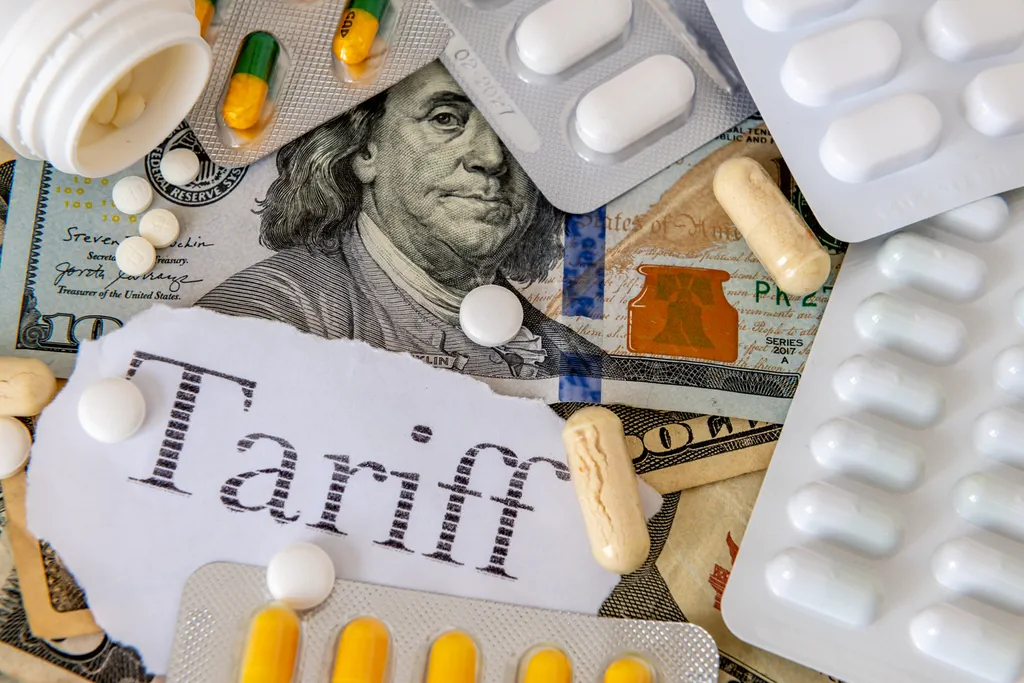
The Tariff Lever: The Real Pressure Behind the Deals
On 12 May 2025, President Trump signed an Executive Order directing HHS to set most-favoured-nation (MFN) price targets for all branded drugs without generic or biosimilar competition, benchmarked to the lowest price available in any OECD country with a GDP per capita above 60% of the US level. All 16 bilateral agreements to date are voluntary and their specific pricing terms remain confidential.
The Bilateral Agreements: A Chronological Account
Deal 1: Pfizer (30 September 2025)
Pfizer was the first to move, and the terms it secured set the template for nearly all that followed. At a White House event attended by CEO Albert Bourla, Pfizer announced it would offer MFN pricing to all US state Medicaid programmes and guarantee MFN pricing on all newly launched products for Medicare, Medicaid, and commercial payers. It also agreed to participate in TrumpRx.gov, with discounts of an average 50% and up to 85% off list price. In return, Pfizer secured the three-year Section 232 tariff exemption, contingent on continued investment in US manufacturing. Pfizer also committed to investing $70 billion in domestic manufacturing.
Deal 2: AstraZeneca (10 October 2025)
AstraZeneca followed ten days later, agreeing to MFN pricing for Medicaid across all state programmes, a commitment to launch new medicines at pricing comparable to other developed nations, participation in TrumpRx, and the same three-year tariff exemption.
Deal 3: EMD Serono (16 October 2025)
The third agreement was notable for its therapeutic focus: EMD Serono (Merck KGaA’s US biopharma unit) agreed to offer its full portfolio of IVF therapies through DTC channels at significantly reduced prices, approximately 84% off list prices when all three therapies are used in combination. EMD Serono also filed a new IVF treatment under the FDA’s National Priority Voucher programme and simultaneously secured a tariff exemption from the Department of Commerce.
Deals 4 & 5: Eli Lilly and Novo Nordisk (6 November 2025)
The Eli Lilly and Novo Nordisk announcements were commercially the most consequential of the entire MFN process, covering semaglutide (Ozempic and Wegovy) and tirzepatide (Mounjaro and Zepbound), the two highest-expenditure drugs in the United States. Key terms:
- Medicare and Medicaid GLP-1 prices set at $245/month (Wegovy and Zepbound list prices: ~$1,350 and $1,080 respectively)
- TrumpRx price: $350/month for injectable GLP-1s (vs. $499 on existing DTC platforms)
- In exchange for these reduced prices, the Trump administration plans to enable Medicare coverage of Wegovy and Zepbound for patients with obesity and at least one comorbidity
- Oral GLP-1 medicines, if FDA-approved, priced at $150/month at launch on TrumpRx
- Novo Nordisk insulin products (NovoLog, Tresiba) capped at $35/month
- Both companies committed to MFN pricing on all new medicines brought to market
- Manufacturing commitments: Eli Lilly ($27 billion in new US investments); Novo Nordisk ($10 billion, including end-to-end US production of a potential oral Wegovy tablet)
The Medicare coverage of obesity drugs (Wegovy and Zepbound) represented a meaningful policy shift, Medicare had previously been prohibited from covering anti-obesity drugs. The coverage will be available through a pilot programme rather than statutory amendment, limiting both its scope and durability.
Deals 6–14: Nine Further Companies (19 December 2025)
On 19 December 2025, nine additional manufacturers simultaneously reached agreements: Amgen, Bristol Myers Squibb, Boehringer Ingelheim, Genentech (Roche), Gilead Sciences, GSK, Merck, Novartis, and Sanofi. By this point, 14 of the 17 originally named manufacturers had agreed terms. The nine companies collectively committed to more than $150 billion in US-based manufacturing and R&D investment. Several also agreed to donate active pharmaceutical ingredients to a national emergency stockpile. The structure of these agreements mirrored prior deals: Medicaid MFN pricing, MFN at launch for new products, TrumpRx participation, and a three-year Section 232 tariff exemption.
The table below shows the headline TrumpRx price reductions announced by the White House on 19 December 2025:
| Drug | Company | Previous List Price | TrumpRx Price | Approx. Discount |
|---|---|---|---|---|
| Repatha (evolocumab) | Amgen | $573/mo | $239/mo | 58% |
| Reyataz (atazanavir) | Bristol Myers Squibb | $1,449/mo | $217/mo | 85% |
| Jentadueto (linagliptin/metformin) | Boehringer Ingelheim | $525/mo | $55/mo | ~90% |
| Xofluza (baloxavir marboxil) | Genentech | $168 | $50 | 70% |
| Epclusa (sofosbuvir/velpatasvir) | Gilead Sciences | $24,920/course | $2,425 | 90% |
| Advair Diskus 500/50 | GSK | $265/mo | $89/mo | 66% |
| Januvia (sitagliptin) | Merck | $330/mo | $100/mo | 70% |
| Mayzent (siponimod) | Novartis | $9,987/mo | $1,137/mo | 89% |
Deals 15 & 16: Johnson & Johnson and AbbVie (January 2026)
Johnson & Johnson signed its agreement on 8 January 2026, under terms aligned with earlier deals: reduced drug prices, DTC expansion, and continued execution of the $55 billion US investment it had already announced. J&J CEO Joaquin Duato had noted at the company’s Q3 2025 earnings call that negotiations had been ongoing “since day 1, even before day 1.”
AbbVie followed with the largest individual investment pledge of the entire MFN cycle: $100 billion committed to US operations through 2035, spanning obesity indications and domestic API manufacturing. As of April 2026, Regeneron is the only company among the original 17 not to have finalised an agreement, though the company has confirmed ongoing discussions with the White House.
TrumpRx: The Direct-to-Consumer Vehicle
Central to every bilateral agreement is participation in TrumpRx.gov, a federally managed direct-to-consumer platform designed to allow patients to purchase medicines directly from manufacturers at MFN prices, bypassing traditional intermediaries. The platform launched in early 2026.
TrumpRx primarily benefits uninsured and underinsured cash-paying patients. For the majority of Americans who receive medicines through employer-sponsored commercial insurance or traditional Medicare Part D, the pricing on TrumpRx is largely less relevant. Most commercial-market pricing remains untouched by bilateral MFN deals in their current form.
The International Dimension: The US-UK Pharmaceutical Agreement
Alongside bilateral manufacturer deals, the administration pursued a parallel objective: pressuring foreign governments to pay more for medicines, narrowing the international price gap from both sides simultaneously.
First announced in principle on 1 December 2025, the US-UK Pharmaceutical Partnership [EB12.1]was formally concluded on 2 April 2026, four days before publication. It is the first government-to-government bilateral pharmaceutical pricing agreement of its kind. The UK is now the only country in the world with confirmed 0% tariffs on pharmaceutical exports to the US.
UK Commitments
- NHS net price for newly launched medicines raised by 25%, effective April 2026
- Medicines spending to rise from 0.3% of GDP to 0.35% by 2028 and 0.6% by 2035
- NICE cost-effectiveness thresholds updated from 31 March 2026, the first revision in over 20 years. Two medicines (a brain cancer drug and a stomach cancer drug) approved immediately under the new threshold.
- VPAG rebate clawback for newer medicines capped at 15% (down from 22.9% in 2025)
- New UK-US Joint Life Sciences Taskforce launched; pilot schemes expected by September 2026
US Commitments
- Zero tariffs on UK pharmaceutical exports and pharmaceutical ingredients to the US, 1 January 2026 through 19 January 2029
- No Section 232 or Section 301 tariff action targeting UK pharmaceutical pricing practices for the same period
- MFN carve-out: where the UK price for a new medicine is the lowest in the reference basket, it will not anchor the US Medicaid MFN price
The Trade Representative explicitly noted it is reviewing the pharmaceutical pricing practices of “many other US trading partners,” signalling that EU countries might expect similar bilateral engagement. However, no public information points to this explicitly.
Navigate MFN and Market Access with Justin Stindt Consultants
Justin Stindt Consultants is a specialist market access consultancy serving pharma, biotech, and medical device companies across the US and EU. We are actively tracking MFN developments and translating them into actionable pricing and reimbursement strategy for our clients.
- Global pricing & reimbursement strategy: US and EU market access expertise, from early development through launch and beyond.
- MFN scenario planning and mitigation strategies: Enabling EU & global launches at MFN compatible prices, strategies and measures to mitigate potential MFN impacts
- HTA and payer engagement: Deep knowledge of FDA, EMA, NICE, and other national payer processes
- Bespoke solutions: Every engagement is tailored to your product, market, and competitive context
Ready to strengthen your market access strategy in response to MFN and evolving US-EU pricing dynamics? Contact Justin Stindt Consultants to discuss how we can support your team.